

How Much Do Dental Bridges Cost?
Dental bridges, which bridge the gaps between teeth, are not the cheapest or most expensive traditional tooth replacement method.
You can consider them your middle option, but they’re not a one-off cost. They won’t last forever.
So, remember to factor in the future costs and weigh them when choosing a dental bridge as your prosthetic.
Compare them to other solutions like dental implants, which are initially more expensive but are longer-lasting.
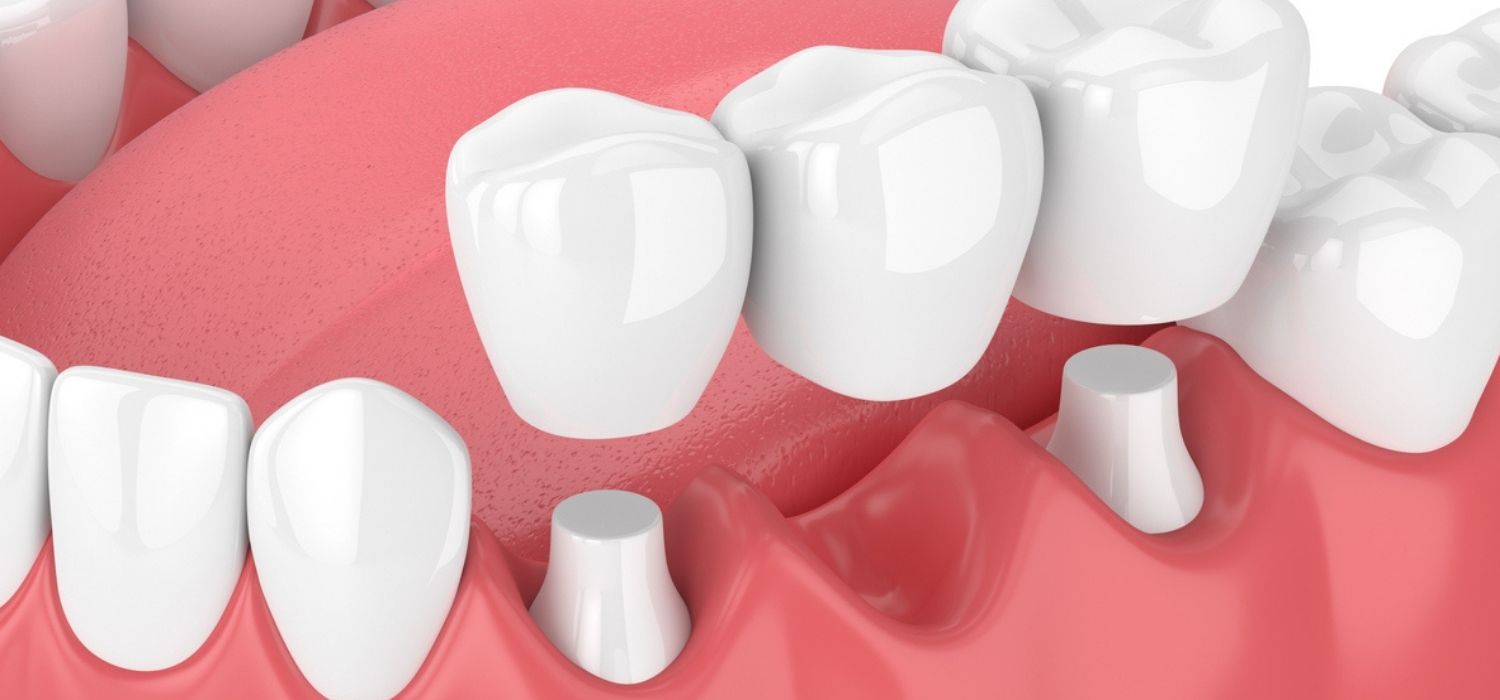
Breaking down dental bridge cost:
Different dental bridges are targeted to other types of tooth loss or have other features, such as how they’re bonded to teeth.
Below, we break down the price of each and explain what they’re used for:
The above prices are private dental fees; the typical NHS dental bridge fee starts from £332.10 and is a Band 3 treatment.

Ready to restore your smile with a dental bridge?
Call us now on 020 7928 4474 for expert advice on your options and a clear breakdown of the costs. Let’s find the right solution to give you the smile you deserve!

Priced per tooth
The cost of dental bridges can vary.
You can expect prices to depend on the material used for your bridge, such as resin, zirconia, metal, or ceramic, as well as the number of teeth you need to replace.
The price to replace a single tooth with a whole row of missing teeth will be completely different, and your prices typically indicate the price for a single missing tooth.
Other factors to consider may include additional procedures to prepare your mouth for a bridge installation, such as a check-up, a thorough cleaning, and sometimes even a tooth extraction.
Explore costs for Implant-Supported Bridges.

Are you serious?
If you’re exploring long-term solutions for missing teeth, book your free consultation online today at our London practice.
Just select ‘Complimentary Implant Consultation’ (a £25 deposit is required to secure your appointment, fully refundable on the day).
Or call us on 020 7928 4474 to chat with our team at Mint Dental Clinic in Elephant & Castle, London.

Are dental bridges available via finance?
When you go private, you can finance any dental treatment that costs more than £350.
So, in the case of dental bridges, which cost a minimum of £695 at our London clinic, you can finance them.
Dental finance is available interest-free for 12 months, followed by interest-bearing terms of up to 60 months. No deposit is required.
However, if you place a deposit, you can bring down your monthly payments. Dental bridges cost from £695, and using 0% finance can cost £57.91 per month (no additional cost of credit).
Dental finance is not available via the NHS.
Advantages of dental bridges
- Aesthetics are restored after having the missing tooth/teeth replaced.
- Improved chewing capability and speech impediments eliminated.
- Reinforced biting force to ensure the correct force when eating.
- Stops teeth from shifting.
Call 020 7928 4474 today to discuss how a dental bridge can restore your smile. Our team is ready to guide you through your options and costs, ensuring you make the best choice for your dental health.
Explore next: Dental Implants vs Dental Bridges.
The Four Types of Dental Bridge and What Each Costs
“Dental bridge” covers four quite different treatments at quite different prices. Knowing which one you are being quoted for is the difference between a fair price and a confusing one.
Traditional bridge (fixed-fixed)
The most common type. The teeth either side of the gap are prepared and crowned, and the replacement tooth is fused between them as a single piece.
Strong, long lasting, and the usual choice for back teeth that take heavy chewing force. The trade off is that two healthy teeth get cut down to hold one replacement. If those teeth already have large fillings or crowns, that trade off matters far less.
Maryland bridge (adhesive or resin-bonded)
The replacement tooth is held by thin metal or ceramic wings bonded to the back of the neighbouring teeth. Almost no drilling is involved.
Cheaper than a traditional bridge and far kinder to healthy teeth, which makes it a common choice for a single missing front tooth. It is less strong, and the bond can debond over time and need rebonding. Market rates in the UK run roughly £800 to £1,800.
Cantilever bridge
Anchored to a tooth on one side of the gap only. Used where there is a healthy tooth on one side and nothing suitable on the other.
Fewer teeth involved, but all the chewing force lands on a single anchor, so it suits low-force positions rather than molars.
Implant-supported bridge
Anchored to implants placed in the jaw rather than to natural teeth. The most expensive option and the only one that does not depend on neighbouring teeth at all.
Worth considering when several teeth in a row are missing, or when the teeth either side are not strong enough to carry a conventional bridge. Our page on implant-supported bridges covers this in detail.
What “Units” Means, and Why It Changes the Price
This is the single biggest source of confusion in bridge quotes, and it explains why one practice quotes £695 and another quotes £2,800 for what sounds like the same thing.
A unit is one tooth position in the bridge, and that includes the anchor teeth, not just the gap being filled.
So replacing one missing tooth using the teeth either side is a 3-unit bridge: two crowned anchors plus the replacement in the middle. Two missing teeth in a row usually means a 4-unit bridge. Longer spans keep counting up from there.
Why this matters when comparing quotes: a price advertised “from £695” is almost always per unit. A 3-unit bridge at that rate is roughly £2,085, not £695. That is not a trick, it is just how the pricing is structured, but it catches people out constantly.
When you get a quote, the useful question is simply: how many units is this, and is the price per unit or for the whole bridge? Any practice will answer that in a sentence.
Dental Bridge Cost on the NHS
A bridge is available on the NHS as a Band 3 treatment, currently £332.10 in England. Band charges are set nationally, change each April, and differ across England, Wales, Scotland and Northern Ireland, so check the current figure on the NHS website before relying on it.
Two things about that charge are worth knowing, because they are not obvious.
The number of units does not change the NHS price
Band 3 covers the bridge regardless of how many units it has. A 2-unit, 3-unit or 4-unit bridge is the same single charge. That is very different from private treatment, where each unit adds to the total, and it is why the NHS is dramatically better value for longer spans.
Preparation work is charged separately
Band 3 covers the bridge itself. It does not automatically cover work needed first. An extraction, a root canal or fillings in the anchor teeth fall under Band 1 or Band 2 and are charged as their own course of treatment.
So the realistic NHS total for someone who needs preparatory work is higher than the headline figure, though still well below private rates.
The practical catch
Availability. NHS dental appointments in London are difficult to obtain, and NHS bridges are made to a standard specification rather than to a choice of material. If the tooth is visible when you smile, that limitation is worth understanding before you decide.
We are a private practice, so we cannot offer NHS treatment. We would still rather you knew the comparison than found out later.
Why London Costs More
Bridge pricing varies considerably by region, and London consistently sits at the top. Reported market rates put London roughly 30 to 50 percent above the national average, with a traditional 3-unit bridge commonly quoted between £2,200 and £3,800 in the capital against £1,400 to £2,400 in Manchester or Bristol.
That gap is largely premises costs, laboratory rates and clinician time, not a different standard of work.
Two things follow from it. Comparing a London quote against a national average will always look unfavourable, so compare like with like. And a very low London quote is worth asking questions about, specifically where the laboratory work is being done and what material is being used.
Our own fees are published on our fees page, and we will give you the unit count and the total in writing before anything starts.
What Else Can Add to the Bill
The quote for the bridge itself is rarely the whole cost. These are the additions we see most often, and a good practice will flag them at the consultation rather than later.
- Extraction of the failing tooth, where the gap does not exist yet
- Root canal treatment on an anchor tooth, if the nerve is affected by the preparation or was already compromised
- Fillings or a new crown on an anchor tooth that is not currently sound enough to carry a bridge
- Gum treatment, because a bridge placed over active gum disease will fail early
- A temporary bridge to wear while the permanent one is made
- Replacement eventually, since bridges do not last forever
That last point is the one people underestimate. A bridge is a repeat cost across a lifetime, not a single purchase, which is what changes the comparison against an implant.
How Long Does a Dental Bridge Last?
Typical lifespans, assuming reasonable care:
- Traditional bridge: around 10 to 15 years
- Maryland bridge: around 5 to 10 years, and may need rebonding sooner
- Implant-supported bridge: 20 years or more, with the implants themselves often lasting far longer
What usually ends a bridge is not the bridge failing. It is decay in an anchor tooth, underneath the crown, where you cannot see it and cannot easily clean. Which leads directly to the next section.
Cleaning Under a Bridge
This is the part that decides whether you get ten years or twenty out of the money you spend, and it gets skipped in most cost guides.
A bridge is a single solid piece, so you cannot floss between the units the normal way. Plaque collects underneath the false tooth where it meets the gum, and decay starts on the anchor teeth at the crown margin.
Three things work:
Superfloss has a stiffened end you thread under the pontic and a spongy section that sweeps the underside. Once a day.
Interdental brushes in the right size, used at the margins where each crown meets the gum. Your dentist or hygienist will tell you which size fits.
A water flosser is not a substitute for either, but it helps considerably around bridgework and most people find it easier to keep up with.
Regular hygienist appointments matter more with a bridge than without one, because the areas at risk are the ones you cannot inspect yourself.
Bridge, Implant or Denture?
For a single missing tooth, all three are reasonable, and the honest comparison is about circumstances rather than a winner.
Bridge. Fixed, quicker than an implant, no surgery. Costs two healthy teeth to place, and needs replacing every decade or so.
Implant. Leaves neighbouring teeth untouched and preserves the bone under the gap, which nothing else does. Most expensive up front, takes months, and needs enough bone to place into. Often the cheaper option measured across twenty or thirty years. Our bridges versus implants comparison goes further into this.
Denture. Cheapest, fastest, and fully reversible. Removable, which some people never get used to. A reasonable stopgap while you decide, and covered on our single tooth denture page.
A rough guide: if the teeth either side already need crowns, a bridge makes good sense because the work is happening anyway. If they are healthy and untouched, an implant avoids damaging them and is usually the better long-term decision.
Frequently Asked Questions
How much is a dental bridge in the UK?
On the NHS, £332.10 as a Band 3 treatment regardless of how many units. Privately, roughly £800 to £1,800 for a Maryland bridge and £1,800 to £4,500 for a traditional 3-unit, with London at the upper end. Always confirm whether a quoted price is per unit or for the whole bridge.
How much is a 3 unit bridge?
A 3-unit bridge replaces one missing tooth using the teeth either side as anchors. Privately in London that commonly falls between £2,200 and £3,800 depending on material. On the NHS it is the standard Band 3 charge.
Is a bridge cheaper than an implant?
Cheaper up front, usually not over a lifetime. A bridge typically needs replacing every 10 to 15 years while an implant often lasts decades, so two or three bridge replacements can exceed the cost of one implant.
Does the NHS charge more for a bigger bridge?
No. Band 3 is a single charge covering the bridge whatever the number of units. Preparatory work such as extractions or root canals is charged separately.
Can I pay for a dental bridge monthly?
Yes. We offer dental finance on treatment over £350, interest free for 12 months and with longer terms available. NHS treatment cannot be financed.
How long does it take to get a bridge fitted?
Usually two to three appointments across two to four weeks. The teeth are prepared and impressions taken at the first visit, you wear a temporary bridge while the laboratory makes the permanent one, then it is fitted and adjusted.
Does getting a bridge hurt?
The preparation is done under local anaesthetic, so you feel pressure rather than pain. Some sensitivity in the anchor teeth for a few days afterwards is normal.
What happens if I leave the gap instead?
Teeth drift into the space and the opposing tooth over-erupts because nothing meets it. That changes your bite and can make later treatment more complicated and more expensive than treating it now.
Get a Written Quote in Elephant & Castle
If you want a straight answer on what a bridge would cost in your case, the only way to get one is an examination, because the unit count and the state of the anchor teeth decide the price.
Call 020 7928 4474 or book online. We are in Elephant and Castle, minutes from Waterloo, Borough, London Bridge and Southwark, and you will get the unit count and total in writing before any work begins.
Market pricing figures are indicative UK ranges from published 2026 cost guides, not our fees. NHS band charges change each April, so confirm the current rate on the NHS website. Last reviewed August 2026.


